
The power of fans in the new user-centric era
The media landscape is changing faster than ever. As technology continues to evolve, it is impossible to imagine a future without what we now refer to as new media. The result of this transformation is the inevitable decline of traditional channels and the rise of a new ecosystem; one in which the audience holds all the power.
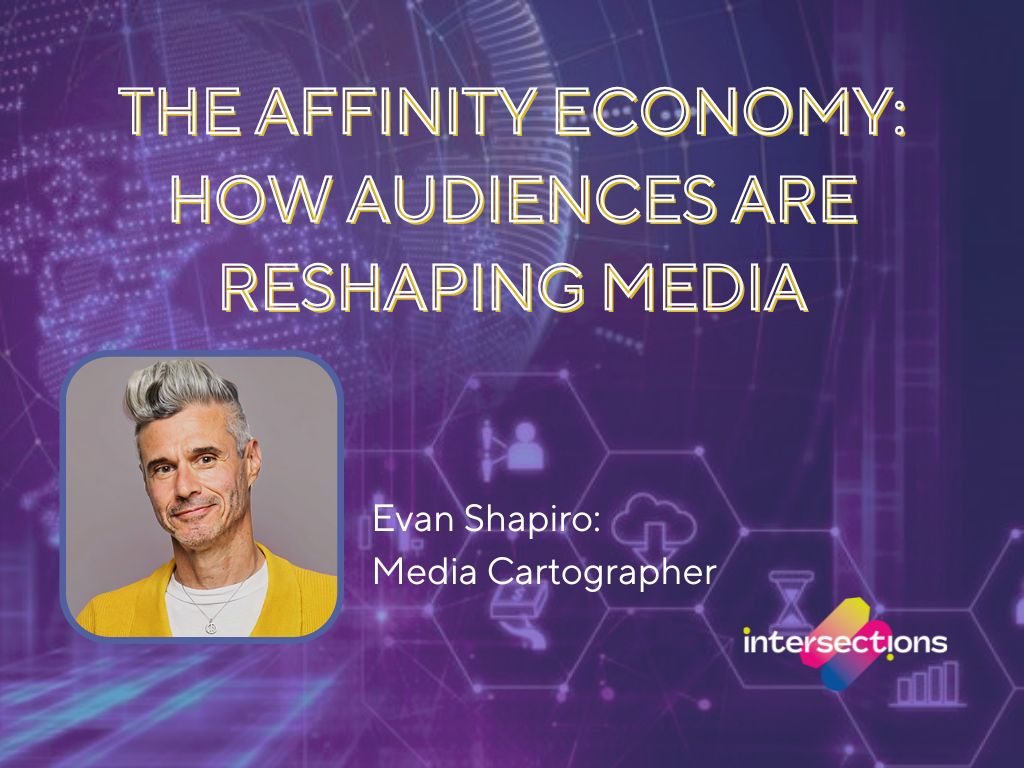
This is the vision of Evan Shapiro, media cartographer and keynote speaker at Intersections 2025, Italy’s biggest event dedicated to marketing, communication, creativity, and technology. According to Shapiro, the only way to survive, and thrive, in this user-centric era is to truly understand your audience. At the core of what he defines as the Affinity Economy lies the consumer and their passions.
Nowadays, it is essential for brands and media companies to know their audiences and how they consume content in order to build effective and successful strategies. In a world where ‘demographics do not age, but generations do’, as Shapiro rightly claims, traditional media continue to overlook a crucial portion of the population: those who grew up surrounded by technology. Generations such as Millennials and Gen Z are no longer just a young audience; they now represent the majority of consumers, the primary target for the coming decades, and their habits are rapidly becoming society’s new standard.
Another interesting idea that emerges from Shapiro’s speech is the existence of two distinct media ecosystems. On one hand are the younger generations, raised on social networks and digital entertainment; on the other, older audiences who still rely on traditional media. The key to success lies in knowing how to address both, integrating languages and channels to reach the entirety of your target audience.
Since the consumer now sits at the centre of the Affinity Economy, it is crucial to observe and interpret data rather than ignore it. Media consumption and digital subscriptions are steadily declining, making it increasingly difficult to reach established audiences. The media ecosystem is highly fragmented, and focusing solely on older generations or traditional channels would inevitably result in a significant loss of consumers. Therefore, it is essential for brands to develop cross-platform strategies capable of combining streaming, social, and traditional media in a cohesive way.
According to Shapiro, the heart of the Affinity Economy lies in replacing the so-called ‘vanity KPIs’, such as follower count, with new metrics of passion and engagement that measure the quality of interaction. In order to succeed, it is necessary to turn viewers into fans, and fans into active participants, encouraging comments, reactions, and sharing.
Shapiro also highlights the growing importance of creators, who have now become vital to the media ecosystem. Integrating creators into brand strategies represents an ideal way to leverage the power of fandom, and use it to generate value, without having to invest in traditional advertising. Integrated sponsorships on platforms like YouTube are now among the fastest-growing segments in the entire sector. What matters most is no longer the amount spent, but the authenticity of the content.
In this new era of media, marketing no longer consists of talking to your consumers, but with them. It is about collaboration, listening, and giving them a voice. Placing the audience at the centre of every brand decision is not just a strategy; it’s the essential condition for growth.
This is the essence of Evan Shapiro’s Affinity Economy.
By Mariateresa Garaguso.


